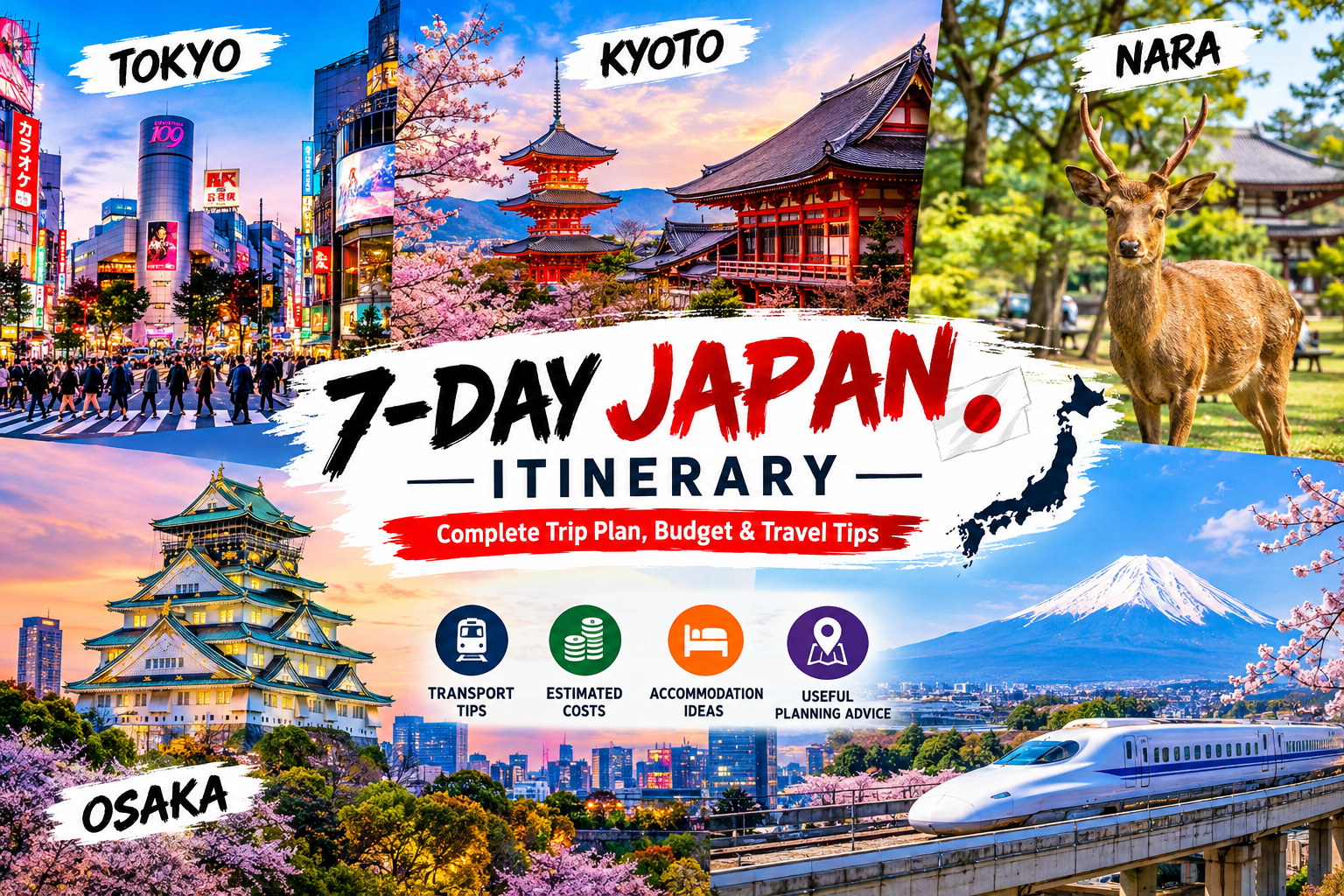
7-Day Japan Itinerary: Complete Trip Plan, Budget & Travel Tips
Planning your first trip to Japan can feel a little overwhelming. There is so much to see, from the bright streets of Tokyo to Kyoto’s temples and traditional neighborhoods, not to mention Osaka’s food scene and Nara’s historic sights.
This 7-day Japan itinerary is designed for travelers who want to experience Tokyo, Kyoto, Nara and Osaka in one trip. It is doable, but it is definitely fast-paced. You’ll spend a fair amount of time on trains and moving between destinations.
Japan’s official tourism organization, JNTO, notes that travelers with a week or less may find it more comfortable to choose one base city and take day trips. For the classic Tokyo–Kyoto–Osaka route, around 10 days to two weeks gives you considerably more breathing room.
So, think of this itinerary as a high-energy introduction to Japan rather than a relaxed vacation. If you’re happy to trade some downtime for seeing several major destinations, it can work well.
7-Day Japan Itinerary at a Glance
| DayDestinationMain Activities | ||
|---|---|---|
| Day 1 | Tokyo | Arrival, Shibuya, Shinjuku |
| Day 2 | Tokyo | Asakusa, Harajuku, Shibuya |
| Day 3 | Tokyo | Sightseeing and shopping |
| Day 4 | Tokyo → Kyoto | Shinkansen, Kyoto sightseeing |
| Day 5 | Kyoto | Fushimi Inari, Kiyomizu-dera, Arashiyama |
| Day 6 | Kyoto → Nara → Osaka | Nara Park, Todai-ji, Osaka |
| Day 7 | Osaka | Osaka Castle, shopping, Dotonbori, departure |
Tip: If your flight schedule gives you the option, consider flying into Tokyo and home from Osaka, or doing the route in reverse. This can save you from having to travel all the way back to your starting city.
Day 1: Arrive in Tokyo
After a long international flight, there’s no need to rush straight into a packed sightseeing schedule.
Check into your accommodation, drop off your luggage and give yourself some time to adjust. Depending on when you arrive, you can explore one nearby neighborhood rather than trying to squeeze in several attractions.
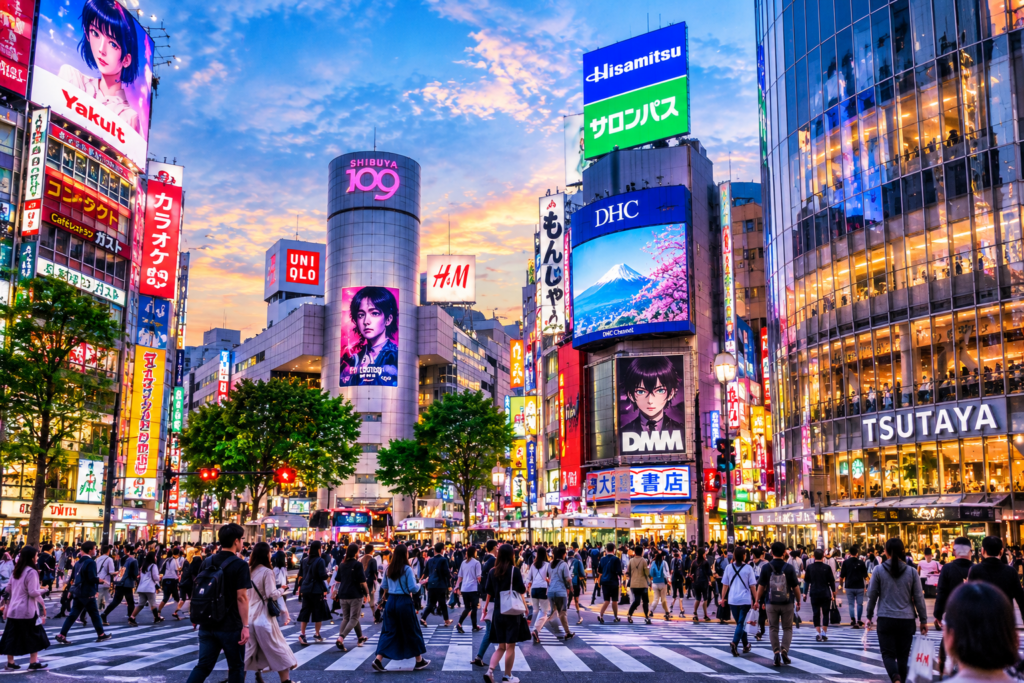
Easy options for your first day
- Shibuya Crossing
- Shibuya streets and shops
- Shinjuku
- Tokyo Metropolitan Government Building area
- A nearby restaurant or convenience store
Evening in Shibuya
If you have enough energy, head to Shibuya in the evening. It’s one of Tokyo’s most recognizable neighborhoods and a fun place to get your first taste of the city’s energy.
Grab dinner, walk around the area and then head back to your hotel. The next few days are going to be busy, so getting some rest is worth it.
Day 2: Tokyo — Asakusa, Harajuku & Shibuya
Start your second day in one of Tokyo’s more historic areas before moving into its younger, trendier neighborhoods.
Morning: Asakusa
Begin with:
- Senso-ji Temple
- Kaminarimon Gate
- Nakamise shopping street
Asakusa feels very different from modern districts such as Shibuya and Shinjuku. Give yourself some time to walk around rather than simply checking the main sights off your list.
Afternoon: Harajuku
From Asakusa, continue to Harajuku and explore:
- Takeshita Street
- Meiji Jingu area
- Local shops and cafés
Harajuku is a good place to wander without following a strict schedule. You’ll find plenty of shops and cafés along the way.
Evening: Shibuya
Head back toward Shibuya for dinner and some evening sightseeing.
If you’re interested in shopping, this is also a good time to explore the department stores, fashion shops and other stores around the area.
Day 3: Explore More of Tokyo
You have one more full day in Tokyo, so use it for the places that match your interests.
Depending on what you enjoy, you could visit:
- Tokyo Skytree
- Tokyo Tower
- Akihabara
- A teamLab digital art experience
- Ginza
- Ueno
- Odaiba
Don’t try to see everything. Pick two or three main attractions and leave some breathing room for meals, train journeys, queues and the occasional wrong turn.
One possible plan
Morning: Ueno or Asakusa
Afternoon: Akihabara or Ginza
Evening: Shinjuku or the Tokyo Tower area
Keep your luggage organized tonight because you’ll be heading to Kyoto tomorrow.
Day 4: Tokyo to Kyoto by Shinkansen
Get an early start and take the Shinkansen from Tokyo to Kyoto.
JNTO lists the fastest journey from Tokyo Station to Kyoto at around 2 hours and 20 minutes, although travel time varies depending on the service you take.
Once you arrive in Kyoto, check into your accommodation and spend the rest of the day exploring nearby sights.
Kyoto options for the afternoon
- Nishiki Market
- Gion
- Kiyomizu-dera area
- Shijo Kawaramachi
- Nijo Castle
Don’t try to squeeze all of these into one afternoon. Kyoto is much more enjoyable when you group attractions that are close together.
JNTO’s official Kyoto, Nara and Osaka itinerary also highlights Kyoto’s historic neighborhoods and suggests allowing additional time if your schedule permits.
Day 5: Kyoto — Temples, Shrines & Arashiyama
Today is your main Kyoto sightseeing day, so an early start will help you make the most of it.
Morning: Fushimi Inari
Start at Fushimi Inari Taisha, famous for its thousands of red torii gates winding up the hillside.
Arriving early can make the experience more pleasant, especially if you’d prefer to explore before the busiest part of the day.
Late Morning: Kiyomizu-dera
Next, make your way toward the Kiyomizu-dera area.
Take some time to explore the surrounding streets rather than rushing directly from one attraction to another. This part of Kyoto is especially enjoyable on foot.
Afternoon: Arashiyama
Continue to Arashiyama and visit:
- Arashiyama Bamboo Grove
- Togetsukyo Bridge
- Local streets and shops
- Nearby temples and gardens
Kyoto’s attractions can look close together on a map but still take a while to reach by public transportation. Check routes and opening hours before leaving your hotel so you know roughly how much time each stop will take.
Evening
Head back toward central Kyoto for dinner.
If you still have energy, spend some time around Gion or Pontocho in the evening.
Day 6: Kyoto → Nara → Osaka
This is another full day, so get an early start.
Morning: Nara
Take the train from Kyoto to Nara and spend the morning exploring the city’s main sights.
Consider visiting:
- Nara Park
- Todai-ji area
- Kofuku-ji
- Naramachi
Nara is particularly famous for its historic temples and the deer that roam around Nara Park.
JNTO’s official Kansai itinerary also combines Kyoto, Nara and Osaka as a regional route, making this a practical addition to a short trip.
Afternoon: Continue to Osaka
After exploring Nara, continue on to Osaka.
Check into your hotel, leave your luggage and then head out for your first evening in the city.
You don’t need a complicated plan tonight. Grab some local food, walk around Namba or Dotonbori and enjoy the atmosphere.
Day 7: Osaka — Castle, Shopping & Dotonbori
Your final day is all about Osaka.
Morning: Osaka Castle
Start with Osaka Castle and the surrounding park.
Osaka Castle is one of the city’s best-known attractions and is included among the major sightseeing areas highlighted by JNTO.
Afternoon: Shopping and Exploring
Depending on your interests, spend the afternoon around:
- Namba
- Nipponbashi
- Shinsaibashi
- Dotonbori
These areas are close enough that you can combine shopping, sightseeing and food without spending the whole afternoon on trains.
Evening: Dotonbori
Finish your trip around Dotonbori.
The area is known for its restaurants, shopping and unmistakable Osaka atmosphere, making it a fitting final stop before heading home.
If your international flight is later that day, leave plenty of time to reach the airport. Kansai International Airport is connected to Osaka by rail, but the exact journey time depends on where you’re leaving from and which service you take.
Japan Trip Budget for 7 Days
How much you spend in Japan depends heavily on when you travel, where you stay and how you like to travel.
For this itinerary, a rough budget excluding international flights could look like this:
| ExpenseEstimated Cost | |
|---|---|
| Accommodation | $350–$700 |
| Food | $210–$420 |
| Local & intercity transport | $200–$300 |
| Attractions | $100–$200 |
| Miscellaneous | $100–$200 |
| Estimated total | $960–$1,820 |
Treat these numbers as a planning range rather than a fixed price. Hotel rates and transportation costs can vary considerably depending on the season, location and how far in advance you book.
Traveling during major Japanese holiday periods can also affect your budget. JNTO notes that Golden Week, Obon and the New Year holiday period can be particularly busy, with accommodation and transportation often costing more.
Should You Buy a Japan Rail Pass?
Don’t assume that a nationwide JR Pass will automatically save you money.
The current official price for a 7-day Standard Japan Rail Pass is ¥50,000 when purchased through the official online service. According to the official JR Group price-change notice, the overseas-agency price for the 7-day Standard Pass is scheduled to increase from ¥50,000 to ¥53,000 for purchases made from October 1, 2026.
For a short Tokyo–Kyoto–Osaka trip, compare the cost of:
- Individual Shinkansen tickets
- Local train fares
- Regional rail passes
- The nationwide JR Pass
Your decision will depend on how many long-distance journeys you make and which trains you plan to use.
Getting Around Japan
Japan’s public transportation network makes it relatively easy to travel between major cities and attractions.
For this itinerary, you’ll mainly use:
- Shinkansen
- JR trains
- Local trains
- Subway systems
- Buses
- Walking
Tokyo
Tokyo has an extensive rail and subway network. Staying near a major station can save you a surprising amount of time, especially on a short trip.
Kyoto
Kyoto’s buses and trains are both useful, but the best option depends on where you’re going. For some areas, walking between nearby attractions can be just as practical.
Osaka
Osaka is also well connected by trains and subways, particularly around the main tourist areas.
Before setting out each day, check current routes, fares and operating information because schedules and prices can change.
Where to Stay in Japan
Where you stay matters more than you might expect when you only have seven days. A convenient location can save you a lot of time.
Tokyo
Popular areas include:
- Shinjuku
- Shibuya
- Asakusa
- Ueno
- Tokyo Station area
For a first visit, it can be worth paying a little more for a convenient location rather than choosing a hotel solely because it is the cheapest option.
Kyoto
Consider staying around:
- Kyoto Station
- Downtown Kyoto
- Kawaramachi
- Gion
Kyoto Station is particularly convenient if you’re planning to travel to Nara or Osaka during your stay.
Osaka
Popular areas include:
- Namba
- Umeda
- Shinsaibashi
Namba is especially convenient if you want to spend plenty of time around Dotonbori and Osaka’s main entertainment areas.
Best Time to Visit Japan
Japan is a year-round destination, but each season offers a different experience.
Spring
Spring is famous for cherry blossoms, but that popularity also means major tourist areas can become very crowded.
Summer
Summer is hot and humid across much of Japan. Conditions vary by region, though, and northern and mountainous areas can offer a different experience.
Autumn
Autumn brings pleasant weather and colorful seasonal scenery, making it a popular time to visit.
Winter
Winter is a good choice if you’re interested in snow, skiing and winter landscapes.
JNTO highlights Golden Week in late April to early May, Obon in mid-August, and the New Year holidays from late December into early January as major domestic travel periods. These times can be especially busy and expensive.
JNTO also points to June and weekdays in January and February as examples of comparatively quieter periods.
Japan Travel Planning Tips
1. Don’t Overpack Your Schedule
Japan’s trains are efficient, but getting from one attraction to another still takes time.
Rather than trying to visit 10 places in a day, choose a few that you genuinely want to see and give yourself time to enjoy them.
2. Stay Near Public Transportation
A hotel close to a train or subway station can make a big difference, especially when you’re carrying luggage.
3. Check Opening Hours
Temples, museums, attractions and restaurants can have specific opening days and hours.
Check official websites before visiting, particularly if an attraction is one of the main reasons you’re going somewhere.
4. Leave Some Flexibility
Don’t plan every minute.
You may discover a neighborhood you want to spend more time in, find a restaurant you love or simply need an unexpected break.
5. Carry Some Cash
Cards are widely accepted in Japan, but some smaller businesses and other situations may still require cash.
6. Use Navigation Apps
Google Maps and other navigation apps are useful for checking train routes, transfers and travel times.
It’s still a good idea to check your final route before setting off, especially when you’re changing trains.
7. Travel Light Between Cities
Moving from Tokyo to Kyoto and then Osaka in one week means you’ll be handling your luggage several times.
Keeping your bags manageable can make those transfers much easier.
Is 7 Days Enough for Japan?
Seven days is enough to get a taste of Japan, but you’ll have to make some compromises.
If your priority is seeing Tokyo, Kyoto, Nara and Osaka, this itinerary gives you a way to fit them into one trip. Just expect plenty of travel and relatively little downtime.
JNTO’s current guidance suggests that travelers with a week or less may have a more comfortable trip by choosing one base city and taking nearby day trips. For the classic Tokyo–Kyoto–Osaka route, JNTO recommends around 10 days to two weeks for a more comfortable pace.
With 10–14 days, you could keep the same basic route but spend longer in each destination instead of constantly moving on to the next one.
Alternative 7-Day Japan Itineraries
You don’t have to visit Tokyo, Kyoto and Osaka in the same week.
Sometimes, seeing fewer places makes for a much more enjoyable trip.
Option 1: Tokyo Base
Stay in Tokyo for the entire week and take a few day trips.
Possible additions include:
- Hakone
- Nikko
- Yokohama
- Kamakura
This approach means fewer hotel changes and less time spent moving luggage around.
Option 2: Kansai Base
Stay around Kyoto or Osaka and explore:
- Kyoto
- Nara
- Osaka
- Kobe
- Nearby attractions
This is another good option if you want to slow down and spend more time exploring one region.
Frequently Asked Questions
How much does a 7-day trip to Japan cost?
For this itinerary, a rough budget is $960–$1,820 excluding international flights. Your actual spending will depend on accommodation, food, transportation, activities and travel dates.
Is 7 days enough for Tokyo, Kyoto and Osaka?
Yes, it’s possible, but expect a fast-paced trip. If you want more time to explore each city without rushing, consider staying for 10–14 days.
How long is Tokyo to Kyoto by Shinkansen?
The fastest Shinkansen services take approximately 2 hours and 20 minutes, according to JNTO. The exact journey time depends on the service.
Should I buy a Japan Rail Pass?
Not necessarily. Compare the cost of individual tickets and relevant regional passes with the nationwide JR Pass before making a decision.
What are the best cities for a first Japan trip?
Tokyo, Kyoto and Osaka are among the most common destinations for first-time visitors. Nara is also easy to add when you’re traveling around the Kansai region.
What is the best month to visit Japan?
There isn’t one best month for everyone. Your ideal travel time depends on the weather you prefer, seasonal attractions, crowds and your budget.
Final Thoughts
A 7-day Japan trip can be a fantastic introduction to the country, as long as you go in knowing that you’ll be moving at a fairly quick pace.
This itinerary combines the modern energy of Tokyo, the traditional atmosphere of Kyoto, the historic sights of Nara and the food and entertainment of Osaka. It’s a lot to fit into one week, but it gives first-time visitors a taste of several very different sides of Japan.
The main thing to remember is that seven days is a short time for Japan. If you’d rather travel slowly and have more time to wander, consider focusing on one region or extending your trip to around 10–14 days.
Before booking hotels, trains or attractions, check current prices, schedules and official travel information, since these can change.
Official Japan Travel Resources
For up-to-date travel information and official destination guidance, check the Japan National Tourism Organization (JNTO) and official transportation websites.
- Japan National Tourism Organization — Official Travel Japan
- Japan Rail Pass — Official Website