Baku is a city of contrasts. Behind the stone walls of its historic Old City, you will find medieval architecture, narrow lanes and centuries of history. A short walk away, the skyline changes completely, with modern towers, broad boulevards, contemporary museums and the Caspian Sea forming the backdrop.
For first time visitors, Baku is relatively easy to explore because many of its major attractions are concentrated around the central districts. At the same time, the city is large enough that choosing the right hotel, understanding local transport and planning your daily sightseeing can make a significant difference to the overall experience.
This guide covers the practical side of visiting Baku, including when to go, how much a trip may cost, where to stay, what to see, how to get around, what to eat and what international travelers should know before departure. Prices mentioned below are approximate and can change according to season, exchange rates, availability and booking date, so always check current rates before making reservations.
Why Visit Baku?
Baku is the capital of Azerbaijan and sits on the Caspian Sea. The city combines influences from its Persian, Caucasian, Russian and European past with the appearance of a modern regional capital.
Its historic center, Icherisheher or the Old City, is a UNESCO World Heritage Site. The area includes important landmarks such as the Maiden Tower and the Palace of the Shirvanshahs. Outside the Old City, visitors encounter the Flame Towers, Heydar Aliyev Centre, Seaside Boulevard, museums, shopping centers and the city’s distinctive oil boom architecture.
Baku can work particularly well for travelers who enjoy combining sightseeing with food, architecture, shopping and relaxed city walks. It is also a useful base for excursions into the surrounding Absheron Peninsula and other parts of Azerbaijan.
Best Time to Visit Baku
The best time to visit Baku depends largely on what you want to do.
Spring, particularly April to May, is generally pleasant for sightseeing. Temperatures are more comfortable for walking, parks become more enjoyable and the city is less demanding than during the hottest part of summer.
Summer, from June to August, can be warm and sunny. The Caspian waterfront and beaches can be attractive during this period, but Baku is also famous for strong winds, and the combination of heat and wind can make some afternoons uncomfortable for walking.
September and October are also useful months for a city break. Autumn weather can be comfortable for exploring the Old City, museums, restaurants and the waterfront.
Winter is quieter and can be suitable for travelers primarily interested in museums, architecture, restaurants and indoor attractions. Temperatures can be cold and windy, so warm clothing is advisable.
Azerbaijan’s official tourism information describes spring, summer and autumn as peak seasons while highlighting different experiences in Baku throughout the year.
If your priority is walking around Baku and seeing attractions comfortably, spring and early autumn are worth considering.
How Much Does a Trip to Baku Cost?
There is no single price for a Baku vacation because your total budget will depend heavily on flights, hotel category, travel dates, dining choices and the number of paid attractions or excursions you take.
As a broad planning guide, travelers can think about costs in three categories:
| Travel style | Approximate daily budget, excluding international flights |
|---|---|
| Budget | 70 to 120 AZN |
| Mid range | 130 to 250 AZN |
| More comfortable | 250 AZN and above |
These figures are planning estimates rather than official package prices. A traveler staying in a budget hotel, using public transport and eating at inexpensive restaurants can spend considerably less than someone choosing a central four or five star hotel and taking private tours.
For food, current crowdsourced price data puts an inexpensive restaurant meal in Baku at around 15 AZN, while a three course meal for two at a mid range restaurant is around 65 AZN, although actual prices vary substantially by restaurant and location.
Accommodation is one of the largest variables. Current Booking.com listings show average prices around US$77 per night for three star hotels, US$140 for four star hotels and US$237 for five star hotels, but these figures can change significantly with dates and availability.
For this reason, it is better to use hotel averages as a general reference rather than as a promise of what you will pay.
Where to Stay in Baku
Choosing the right neighborhood can save both time and transportation costs.
Icherisheher and the Old City
Staying inside or immediately around Icherisheher is convenient if historic Baku is your main interest. You can walk to the Maiden Tower, Shirvanshahs’ Palace, restaurants and many central landmarks.
The disadvantage is that some accommodation inside the Old City can cost more because of its location and character. Streets can also be narrow, and not every property is ideal for travelers carrying large luggage.
Downtown and Nizami Street
Central Baku around Nizami Street is one of the most convenient choices for first time visitors. There are restaurants, cafés, shops and plenty of places to walk to.
This area can be particularly practical if you want a balance between sightseeing and evening dining. Hotels range from smaller independent properties to international chains.
Fountain Square
Fountain Square and the surrounding central streets are useful for travelers who want to be close to restaurants, shops and nightlife. The area is lively, so check recent reviews for comments about street noise if you prefer a quiet room.
Boulevard and the Caspian Waterfront
The waterfront area provides easy access to Baku Boulevard, the Carpet Museum, Ferris wheel area and other attractions along the Caspian Sea.
Waterfront hotels can offer attractive surroundings, although you should compare their prices against centrally located alternatives before booking.
Areas Away From the Tourist Center
Neighborhoods farther from the central attractions can sometimes offer larger rooms or lower accommodation prices. However, a cheaper room is not necessarily better value if you need to spend substantial time and money traveling into the center every day.
For a first visit, staying reasonably close to the Old City, Nizami Street, Fountain Square or a convenient metro station is often the simplest approach.
Affordable and Budget Friendly Hotels in Baku
Budget accommodation in Baku comes in several forms, and travelers should not assume that the cheapest room automatically represents the best value.
| Accommodation type | Typical advantages | What to check |
|---|---|---|
| Hostel | Lowest cost, useful for solo travelers | Privacy, lockers, bathrooms and recent reviews |
| Guesthouse | Smaller and often more personal | Location, room size and facilities |
| Budget hotel | Private room and basic services | Cleanliness, breakfast and transport access |
| Three star hotel | Often a good balance of comfort and price | Reviews, location and included services |
| Apartment or residence | More space, useful for families | Cleaning, check in arrangements and exact location |
| Four star hotel | More facilities and services | Whether the extra cost is justified for your trip |
Current accommodation listings demonstrate how widely prices can vary. Booking.com currently lists some budget properties at substantially lower prices than the city’s average three star rate, while prices for specific dates can rise sharply during busy periods.
When comparing affordable hotels in Baku, pay attention to the total price, rather than just the advertised nightly rate. Check whether breakfast, taxes, airport transfers, cancellation, additional guests and other charges are included.
What to Look for When Choosing a Hotel
Location: A hotel close to your planned attractions can be more valuable than a slightly cheaper property far away.
Transport access: Check the walking distance to a metro station or major bus route. Baku’s metro and buses can make central travel inexpensive.
Recent reviews: Read recent guest comments rather than relying only on the property’s overall score. Look specifically for comments about cleanliness, noise, heating or air conditioning, Wi-Fi, staff communication and room condition.
Breakfast: If breakfast is included, check what previous guests actually say about it. A complimentary breakfast can reduce your daily food expenses, but its value depends on quality and variety.
Room size: Some inexpensive central properties have smaller rooms. This may not matter to solo travelers, but it can become important for families or longer stays.
Check in arrangements: Confirm reception hours if you arrive late at night.
Overall value: A hotel that costs a little more but is within walking distance of major attractions may actually reduce your total trip cost.
The Best Things to See in Baku
Icherisheher, the Old City
Start your sightseeing here. Icherisheher is Baku’s historic core and a UNESCO World Heritage Site. Its medieval walls contain narrow streets, historic buildings, museums, galleries, cafés and important monuments.
Allow several hours rather than rushing through it. Walking without a strict schedule is part of the experience.
Maiden Tower
The Maiden Tower is one of Baku’s most recognizable historic landmarks. Its exact original purpose and construction history remain subjects of historical discussion, which adds to the site’s interest.
Palace of the Shirvanshahs
This fifteenth century palace complex was associated with the Shirvanshah dynasty and is among the most important historical sites inside the Old City.
Flame Towers
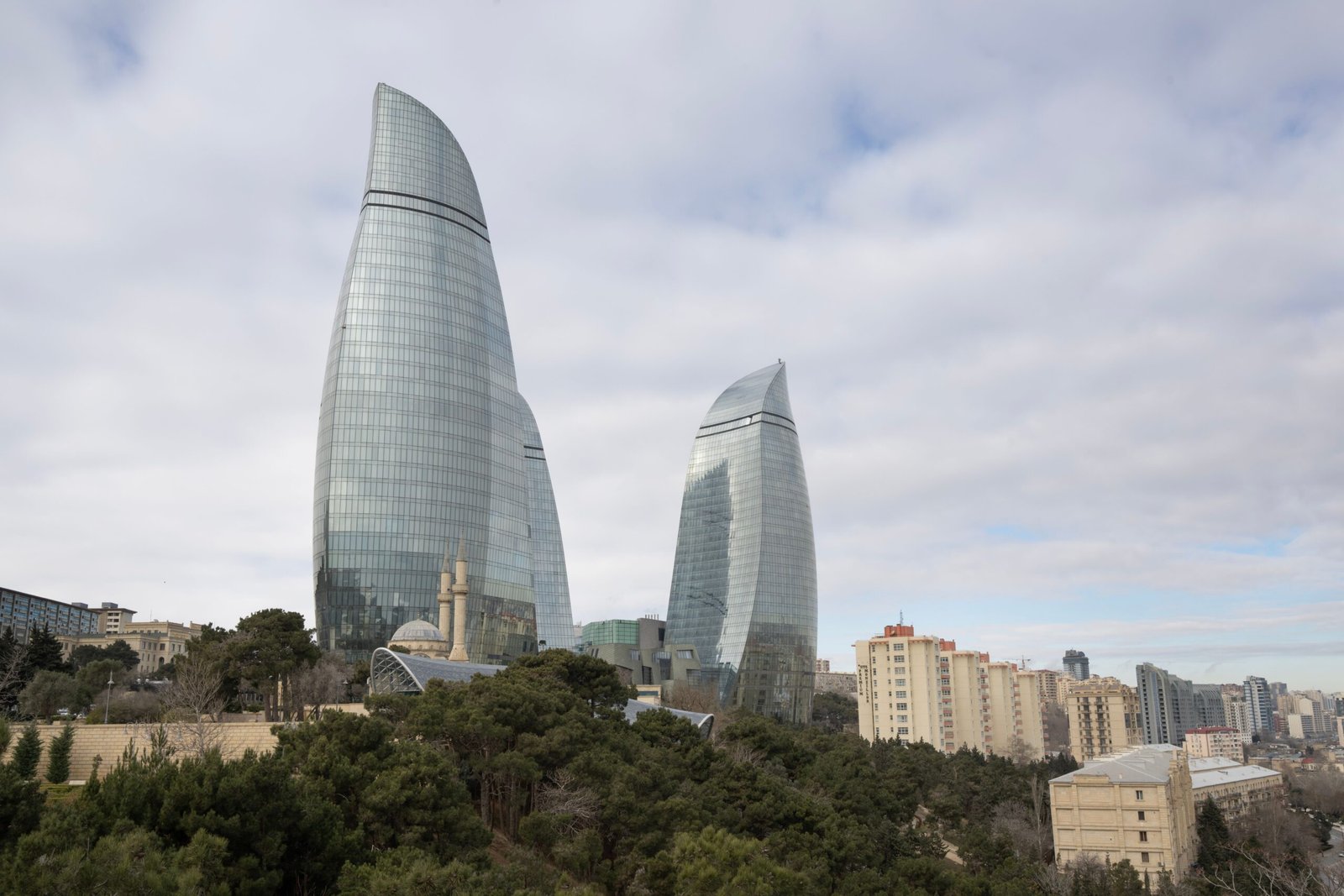
The Flame Towers dominate Baku’s modern skyline and are among the city’s best known architectural landmarks. You can see them from various parts of central Baku, particularly around the waterfront and higher viewpoints.
Rather than simply photographing them from one location, combine the visit with a walk around nearby viewpoints and Martyrs’ Lane.
Heydar Aliyev Centre
The Heydar Aliyev Centre is one of Baku’s most distinctive modern buildings. Designed by architect Zaha Hadid, it houses exhibitions and cultural collections and is surrounded by open public space.
Even travelers who are not particularly interested in museums may want to visit because of the building’s architecture.
Baku Boulevard
The waterfront boulevard is a good place to slow down after visiting museums and historic attractions. It runs along the Caspian Sea and connects several attractions, including the National Carpet Museum and Baku Ferris Wheel area.
National Carpet Museum
Azerbaijan has a long carpet weaving tradition, and the National Carpet Museum provides an opportunity to learn more about this part of the country’s cultural heritage. Its distinctive building is itself an architectural attraction.
Ateshgah Fire Temple and Yanardag
If you have additional time, consider an excursion beyond central Baku to the Ateshgah Fire Temple and Yanardag, often called the Burning Mountain. These sites provide a different perspective on Azerbaijan’s historic association with fire and natural gas.
Things to Do in Baku Beyond Sightseeing
Baku is not only a checklist of monuments.
Take an evening walk through the Old City when temperatures are more comfortable. Spend time along the waterfront. Visit a museum on a hot or windy afternoon. Explore the city’s oil boom architecture around central streets, where nineteenth and early twentieth century buildings provide an interesting contrast with modern Baku.
Food is another important part of the trip. Instead of eating exclusively in tourist areas, try a mixture of traditional Azerbaijani restaurants, casual cafés and local bakeries.
You can also set aside an afternoon for shopping, particularly if you are interested in carpets, handicrafts, traditional products or modern fashion.
Getting Around Baku
Baku has several practical transportation options.
Metro
The metro is one of the most economical ways to move around the city. The current official metro fare is 0.60 AZN per journey, with BakuCard and QR ticket payment options available.
The metro can be particularly useful when traffic is heavy.
Buses
City buses are another affordable option. Routes and fares can change, so check current information before traveling.
Airport Bus
The Aero Express connects Heydar Aliyev International Airport with central Baku. The airport states that the service operates between the airport and Baku Railway Station, with a journey time of approximately 30 minutes under normal conditions. The current fare using the multipass BakuCard is 1.30 AZN, while a single trip card costs 1.50 AZN.
This can be a useful alternative to a private airport transfer.
Taxis and Ride Hailing
Taxis are widely available, including app based services. Azerbaijan’s official tourism information lists services such as Uber and Bolt alongside local taxi companies.
For international visitors, using a recognizable taxi app can make it easier to understand the expected fare before the journey.
What to Eat in Baku
A trip to Baku should include some Azerbaijani food.
Try plov, a rice based dish prepared in different regional styles. Dolma is another familiar Azerbaijani dish, while kebab is widely available in restaurants throughout the city.
You can also look for qutab, a thin filled flatbread, and dushbara, small dumplings traditionally served in broth.
For breakfast or a snack, try local breads, cheeses, eggs, preserves and tea. Azerbaijani tea culture is an enjoyable part of a relaxed meal.
Restaurants in central tourist areas can be more expensive than smaller local establishments, so comparing menus before sitting down is sensible.
Shopping in Baku
Baku has a mixture of modern shopping centers, boutiques, traditional shops and souvenir stores. The official tourism information notes that international goods are widely available and that the city has both modern malls and traditional shopping options.
For visitors looking for souvenirs, consider Azerbaijani tea products, ceramics, traditional crafts and locally made items.
If you are considering purchasing a carpet, artwork or antique, take the export rules seriously. Azerbaijan’s official tourism guidance notes that export certificates are required for carpets, art and antiques in relevant cases.
Do not buy an expensive cultural item simply because it appears to be a bargain. Ask about authenticity, documentation and export requirements first.
Visa Information for International Travelers
Visa requirements depend on nationality, passport type, purpose of travel and current Azerbaijani immigration rules.
Azerbaijan operates an official ASAN Visa electronic visa system for citizens of eligible countries. The official list currently includes countries such as Pakistan, India, the United Kingdom, the United States, Canada, Australia and many European countries.
The official e visa system states that eligible travelers should apply at least three working days before arrival for a standard e visa, while an urgent service is available under its stated conditions. The passport or travel document must also meet the validity requirements specified by the authorities.
Because immigration requirements can change, use the official Azerbaijan e visa portal rather than relying on old travel blogs or unofficial visa websites.
Official Azerbaijan e Visa Portal
Practical Tips for First Time Visitors
Carry some cash. Cards are widely accepted in Baku, but cash can still be useful for smaller businesses and situations where card payment is unavailable.
Learn the currency. Azerbaijan uses the Azerbaijani manat, abbreviated as AZN.
Check the weather before leaving. Baku is known for strong winds, so even during warmer months a light outer layer can be useful.
Wear comfortable shoes. The Old City is best explored on foot, and you may spend much of the day walking.
Keep hotel details available. Save the hotel name, address and telephone number on your phone and keep a copy available offline.
Check attraction opening hours. Museums and attractions can change their opening schedules, particularly around holidays or special events.
Do not rely on old prices. Transport fares, hotel rates, museum tickets and restaurant prices can change.
Allow extra airport time. International flight schedules and airport procedures can vary, so do not plan a sightseeing activity immediately before departure.
Use official information for visas. Visa rules are particularly important to verify shortly before travel.
Consider your location carefully. A slightly more expensive hotel in a convenient central location may be more practical than a cheaper property requiring long taxi rides every day.
A Simple Baku Itinerary for First Time Visitors
For a three day Baku trip, a practical plan could look like this:
Day 1: Explore Icherisheher, Maiden Tower and Palace of the Shirvanshahs. Continue toward Fountain Square and Nizami Street in the evening.
Day 2: Visit the Heydar Aliyev Centre, explore modern Baku and spend the evening along the Caspian waterfront.
Day 3: Visit the National Carpet Museum and other central attractions, then consider an excursion to Ateshgah and Yanardag if you prefer a longer sightseeing day.
If you have four or five days, you can slow down the schedule and include more museums, restaurants, shopping and a day trip outside the city.
Is Baku Suitable for a Budget Trip?
Baku can be adapted to different budgets. Public transport is inexpensive, casual restaurants can be reasonably priced and there are accommodation options ranging from hostels and guesthouses to luxury hotels.
The biggest challenge for a budget traveler is usually controlling accommodation and flight costs rather than everyday transportation.
Booking early, comparing several accommodation areas and checking what is included in the room rate can help you understand the real cost of your trip. However, there is no universal cheapest option because prices vary according to dates and demand.
Final Thoughts
Baku is an interesting destination for travelers who want history, architecture, food and modern city life in the same trip. Its medieval Old City sits alongside contemporary landmarks such as the Flame Towers and Heydar Aliyev Centre, while the Caspian waterfront provides a natural place to slow down between sightseeing stops.
For first time visitors, the most useful preparation is fairly simple: choose your hotel location carefully, check current visa requirements, understand your airport transfer options, keep a realistic daily budget and allow time to explore rather than trying to see everything in one day.
Most importantly, check current prices, transport schedules, attraction opening times, hotel policies and entry requirements shortly before departure. Travel information can change, and current official sources are the safest reference for decisions that affect your booking.
With sensible planning, Baku can be explored through a combination of walking, public transportation, local food and carefully selected attractions, giving first time visitors a practical introduction to Azerbaijan’s capital without requiring an unnecessarily complicated itinerary.