How to See the Northern Lights in Iceland: Best Time, Places and Travel Tips
Seeing the Northern Lights in Iceland is an experience many travellers dream about. The dancing colours across the night sky can be unforgettable, but catching a glimpse of the aurora takes a little planning. You need the right time of year, a dark sky and, most importantly, favourable weather.
Iceland’s official tourism website says the Northern Lights season generally runs from late August to late April. During these months, the nights are dark enough to give you a chance of seeing the aurora. However, there is no guarantee. Cloudy skies, weather conditions and solar activity all play a part.
If you’re planning a trip to Iceland, this guide covers the best time to visit, where to look for the Northern Lights, what to pack and how to make the most of your evenings.
When Is the Best Time to See the Northern Lights in Iceland?
The Northern Lights season in Iceland runs from late August until late April. Darkness is essential for viewing the aurora, which is why the bright summer nights aren’t suitable for most visitors.
The best time to visit depends on what you want from your trip. Winter brings longer nights and more hours of darkness, while autumn and early spring offer a mix of sightseeing opportunities and favourable viewing hours.
According to Visit Iceland’s Northern Lights guide, clear skies and aurora activity are both important if you want to see the lights.
Northern Lights season by month
| Period | What to expect | Planning advice |
|---|---|---|
| Late August | Darkness starts returning, but nights are still relatively short. | Check sunset and twilight times before booking. |
| September–October | Evenings become darker, while daytime sightseeing is still practical. | Keep a few evenings free for aurora viewing. |
| November–February | The longest nights provide plenty of potential viewing time. | Prepare for cold weather, strong winds and possible snow. |
| March | Days get longer, but the nights are still dark enough for viewing. | Combine daytime excursions with flexible evening plans. |
| Early–mid April | Nights become shorter as spring approaches. | Check local darkness and twilight times before travelling. |
| Late April–August | Bright nights make ordinary aurora viewing difficult or impossible. | Consider visiting for hiking, landscapes and long summer days instead. |
These dates are general guidelines. The amount of darkness varies throughout the season, and the Northern Lights can never be guaranteed.
For the latest seasonal information, visit Visit Iceland.
How Do the Northern Lights Work?
The Northern Lights, also known as the aurora borealis, are created when charged particles from the Sun interact with gases in Earth’s upper atmosphere.
The result is a colourful display that can include shades of green, pink, purple and other colours. Green is the colour most commonly associated with the aurora, although every display looks a little different.
Iceland’s location near the Arctic Circle makes it a popular destination for Northern Lights viewing during the darker months.
One thing to remember is that the aurora doesn’t follow a schedule. It might appear for a few minutes, light up the sky for much longer or remain out of sight throughout your visit.
Even when aurora activity is strong, thick clouds can block the view. That’s why checking the weather is just as important as checking the aurora forecast.
Best Places to See the Northern Lights in Iceland
You don’t have to visit one particular spot to see the Northern Lights. The aurora can appear across Iceland when conditions are right.
Your best approach is to find a place with limited artificial lighting, check the local forecast and choose a location you can reach safely.
Here are five places and types of accommodation worth considering.
1. Reykjavík
Reykjavík is a convenient starting point for a Northern Lights trip. The capital has plenty of hotels, restaurants, transport options and guided excursions, making it a practical base for exploring Iceland.
You can sometimes see the aurora from Reykjavík itself, although the city’s artificial lighting can make faint displays harder to spot.
If the forecast looks promising, consider heading to a darker area outside the city. You may have a better view away from streetlights, provided the weather and road conditions allow it.
For local advice and excursion information, visit Visit Reykjavík’s Northern Lights guide.
2. Thingvellir National Park and the Golden Circle
Thingvellir National Park is one of the main stops on Iceland’s popular Golden Circle route.
The surrounding area offers beautiful landscapes and opportunities to escape the bright lights of larger towns. If the skies are clear, it can be a scenic place to watch for the aurora.
Many travellers visit the Golden Circle during the day and consider staying out after sunset if conditions are suitable.
However, don’t assume that a route that’s easy to drive during daylight will be safe at night. Check road conditions, weather warnings and park access information before setting off.
3. Kirkjufell and the Snæfellsnes Peninsula
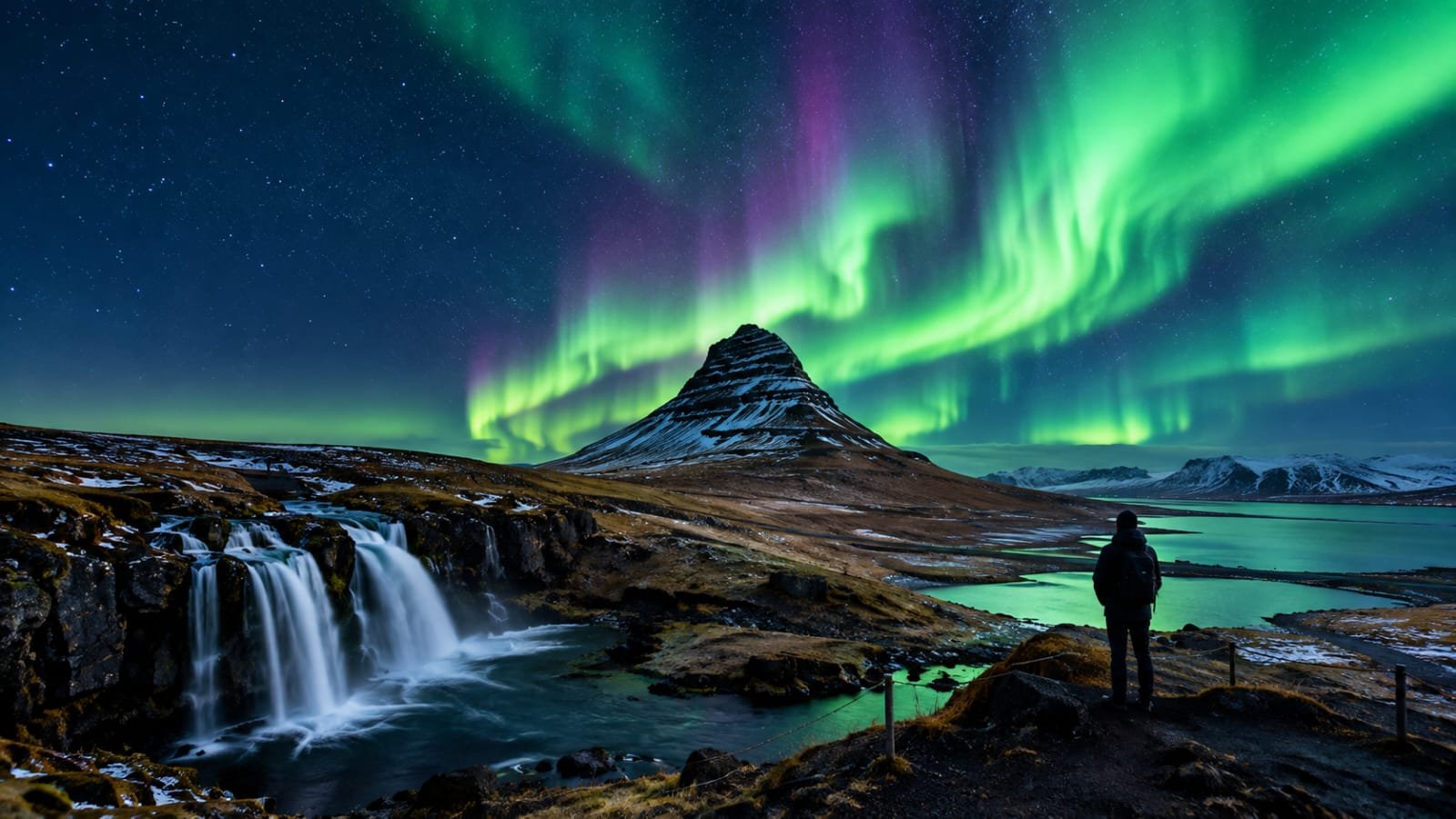
Kirkjufell is one of Iceland’s most recognisable mountains. Its distinctive shape, along with the nearby waterfalls, makes it a popular spot for landscape photography.
The Snæfellsnes Peninsula can also provide a beautiful setting for Northern Lights photography when the skies are clear.
Conditions here can be quite different from those in Reykjavík. Strong winds, cloud cover and difficult roads may affect your plans, so check the forecast for the specific area you’re visiting.
If you’re taking photographs, stick to designated parking and viewing areas. Avoid restricted or dangerous terrain, particularly after dark.
4. North Iceland
North Iceland is another option for travellers hoping to see the Northern Lights. The region combines winter scenery, small towns and opportunities to experience a different side of the country.
According to Visit North Iceland, the broad Northern Lights season extends from late August to mid-April.
You can explore the region independently or look into guided experiences, depending on your itinerary and transport arrangements.
As with the rest of Iceland, the key is to check local cloud cover, weather conditions and road access before heading out.
5. The Icelandic Countryside
Staying in the countryside can make Northern Lights viewing easier, especially if your accommodation is away from streetlights and busy roads.
Some hotels, guesthouses and holiday cottages have outdoor spaces where guests can watch the sky without travelling far.
Before booking, check whether the property has a suitable viewing area, safe outdoor access and convenient transport options.
It’s also worth choosing somewhere you’d enjoy staying even if the aurora doesn’t appear. Clear skies and solar activity are beyond anyone’s control, so your accommodation should be part of the holiday rather than just a place to sleep between viewing attempts.
How to Plan a Northern Lights Trip to Iceland
A little flexibility can make a big difference when planning your trip. Instead of building your entire holiday around one evening, give yourself several opportunities to see the aurora.
Step 1: Choose your travel dates
Start by deciding what kind of Iceland experience you want.
If the Northern Lights are your main priority, travel during the darker months and allow enough time for more than one viewing attempt.
If you’d also like to explore waterfalls, go hiking or visit remote areas, consider how much daylight you’ll need and whether seasonal road closures could affect your plans.
Winter offers long nights, but it also brings more challenging weather. Autumn and early spring can provide a different balance of daylight and darkness.
Step 2: Give yourself several evenings
There’s no magic number of nights that guarantees a sighting. However, staying for several evenings gives you more chances to find a break in the clouds or catch a period of stronger aurora activity.
Try not to book an excursion for every evening. Leave some room in your schedule so you can adjust your plans as the forecast changes.
If the skies are cloudy one night, you may have better luck the next.
Step 3: Check the forecast before heading out
Before leaving your accommodation, check three things:
- Cloud cover and weather: Clear skies give you a better chance of seeing the aurora.
- Aurora activity: Check the latest information about expected activity.
- Road conditions: Make sure your intended route is open and safe to travel.
The Icelandic Meteorological Office provides official weather information.
For travel advice, use SafeTravel Iceland. You can also check road conditions through umferdin.is.
Remember that Iceland’s weather can vary significantly from one area to another. A forecast for the whole country may not tell you what conditions will be like at your chosen viewing spot.
Step 4: Be prepared to change your plans
If the forecast isn’t promising, consider whether another accessible location has clearer skies.
However, driving across the country just to chase a forecast isn’t always practical or safe. A distant location may have better conditions on paper but difficult roads in reality.
Choose an alternative you can reach safely, and don’t hesitate to cancel an outing if the weather turns bad.
Step 5: Plan your transport
If you’re staying in Reykjavík, a guided Northern Lights excursion can save you the trouble of navigating unfamiliar roads at night.
Travellers who prefer to drive themselves should make sure their rental vehicle is suitable for the season and the roads they intend to use.
Check your rental agreement, insurance coverage and any restrictions before setting off. Not every vehicle is suitable for every winter route.
Most importantly, don’t drive in dangerous conditions simply because the aurora forecast looks promising.
Should You Book a Northern Lights Tour?
A guided Northern Lights tour can be a convenient option, particularly if you’re visiting Iceland for the first time.
Local guides may be familiar with viewing locations and changing weather patterns. Depending on the operator, they may also adjust the route when conditions change.
Before booking, take a few minutes to check the details:
- Does the tour operate on your intended travel dates?
- What happens if the weather is unsuitable?
- Can you reschedule or receive a refund?
- Where is the meeting point?
- Is transport included?
- What clothing and equipment should you bring?
- Does the operator provide clear safety instructions?
Pay particular attention to the cancellation policy. Some tours offer another attempt if the Northern Lights aren’t visible, while others have different conditions.
No tour operator can guarantee that the aurora will appear.
If you’d rather explore independently, that’s also an option. Just make sure you’re comfortable with the local weather, road conditions and transport arrangements before heading out.
What to Pack for Northern Lights Viewing
Watching the Northern Lights often means standing outside for a while, sometimes in cold and windy conditions. Even if you’re dressed comfortably for sightseeing, you may need extra layers for an evening spent waiting under the night sky.
Here’s what to bring:
| Item | Why you’ll need it |
|---|---|
| Warm base layers | Help keep you comfortable in cold weather. |
| Insulating jacket | Provides warmth while you’re standing still. |
| Waterproof, wind-resistant outerwear | Helps protect you from Iceland’s changing weather. |
| Gloves and a warm hat | Keep your hands and head protected from the cold. |
| Suitable footwear | Provides warmth, comfort and grip on slippery surfaces. |
| Charged phone | Useful for checking forecasts, navigation and communication. |
| Portable power bank | Helps keep your devices charged in cold conditions. |
| Camera or smartphone | Lets you capture the aurora when conditions allow. |
| Water and a small snack | Useful if you’re spending a long time outdoors. |
Check the forecast before leaving and adjust your clothing accordingly.
If the weather becomes severe, head indoors. Seeing the Northern Lights isn’t worth putting yourself at risk.
How to Photograph the Northern Lights
You don’t need an expensive camera to photograph the aurora. Many modern smartphones have night modes that can capture a display when conditions are suitable.
Keep in mind that photographs may look different from what you see with your eyes. A camera can pick up colours and details that aren’t as obvious when you’re looking at the sky directly.
Smartphone photography tips
- Use a tripod or another stable surface if possible.
- Keep your phone still while the camera takes the picture.
- Try night mode or a low-light setting if your device supports it.
- Avoid unnecessary digital zoom.
- Experiment with your camera settings before heading outside.
- Protect your phone from moisture and extreme cold.
If you’re using a dedicated camera, a tripod and suitable manual exposure settings can help you capture sharper images.
You don’t need to spend the entire evening taking photographs, either. Take a few pictures, then give yourself time to enjoy the experience.
Always watch your footing, stay within designated viewing areas and keep away from roads and dangerous terrain.
Travel Safety Tips for Iceland
Iceland’s scenery is a major reason people visit, but the country’s weather and road conditions can be challenging, especially during winter.
A little preparation can help you avoid unnecessary risks.
Check weather alerts
Conditions can change quickly, with strong winds, rain, snow and poor visibility affecting travel.
Check the latest warnings before leaving your accommodation and keep an eye on updates throughout the day.
Check road conditions before driving
Don’t rely entirely on your GPS or navigation app.
Use official road information, follow closures and pay attention to local instructions. A road that is open in one area may become difficult to travel because of weather elsewhere.
Avoid unsafe roadside stops
Never stop in the middle of a road or in an unsafe location just to watch the Northern Lights.
Use designated parking areas and follow signs, barriers and access restrictions.
Stay away from dangerous terrain
Cliffs, icy slopes, riverbanks and other exposed areas can be hazardous, particularly in darkness.
Don’t climb onto unstable ground or cross barriers to get a better photograph. It’s not worth the risk.
Have a backup plan
If the weather or roads make an evening excursion unsafe, stay at your accommodation or choose an indoor activity.
Iceland has plenty to offer beyond the Northern Lights. Missing a viewing opportunity doesn’t have to ruin your holiday.
For current travel warnings and safety advice, visit SafeTravel Iceland.
Frequently Asked Questions
What is the best month to see the Northern Lights in Iceland?
There isn’t one month that guarantees a sighting. The viewing season generally runs from late August to late April. Your chances depend on darkness, cloud cover and aurora activity.
Can you see the Northern Lights in Reykjavík?
Yes, the aurora can sometimes be seen from Reykjavík when conditions are favourable. However, artificial lighting can make faint displays harder to spot. If conditions allow, heading to a darker area outside the city may improve your view.
How many days should I spend in Iceland to see the Northern Lights?
There is no guaranteed number of days. A longer stay gives you more evenings to check the forecast and look for suitable conditions, but the weather and aurora activity remain unpredictable.
Can I see the Northern Lights in Iceland during summer?
Ordinary Northern Lights viewing is difficult or impossible during Iceland’s bright summer nights. The main viewing season runs from late August through late April, when darkness returns.
Do I need a guided Northern Lights tour?
No. You can look for the aurora independently if you have suitable transport and understand local weather and road conditions. Guided tours are an option for travellers who prefer help with transport and local planning.
Are Northern Lights tours guaranteed?
No. The aurora is a natural phenomenon, so no tour operator can guarantee a sighting. Check the cancellation, refund and rescheduling policy before booking.
What should I wear to see the Northern Lights?
Wear warm layers, an insulating jacket, gloves, a hat and suitable footwear. A waterproof and wind-resistant outer layer is also useful. Check the forecast before heading outside.
Is it safe to drive in Iceland during winter?
Winter driving can be challenging because of snow, ice, strong winds and changing visibility. Check official weather and road information, follow local instructions and avoid driving when conditions are unsafe.
Can I photograph the Northern Lights with a smartphone?
Yes. Many smartphones can capture the aurora using night mode or other low-light settings. The results depend on your device and the viewing conditions. Keeping your phone steady can help improve your pictures.
Final Thoughts
Seeing the Northern Lights in Iceland is an experience worth planning for, but it’s important to keep your expectations realistic. Even during the main viewing season, the weather doesn’t always cooperate, and the aurora can be unpredictable.
Choose dates during the darker months, give yourself several evenings to look for the lights and check the local weather before heading out. Whether you explore independently or join a guided tour, make safety part of your plans.
And don’t build your entire holiday around the aurora. Iceland has waterfalls, glaciers, volcanic landscapes, geothermal pools and fascinating cultural experiences to enjoy, whatever the sky has in store.
For the latest information, use the official tourism, weather and travel-safety resources linked throughout this guide.
Travel information reviewed on 27 September 2026. Weather, road access, tour availability and local safety conditions can change. Check the latest official guidance before travelling.